
Teardown: Brentronics BB-390A/U (Nickle Metal Hydride battery, military)
Last Update: August 15th, 2026
Table of Contents
Introduction
When I said I'd deep-dive into more military batteries in the "near future", I didn't think it would take me two years. Yeesh. This is a teardown and analysis of a Brentronics BB-390A/U (P/N BT-70290, NSN 6140-01-419-8187).This particular example was purchased off eBay in like-new condition. It appears to have been built in May of 2000, and appears to have been "inventoried" twice in 2001, once in 2002, and possibly once in 2006 before it was sold as surplus. It does not appear to have ever been opened, nevermind used. The datasheet can be found here (local copy). The battery is designed to offer either 12 V and 24 V output, and has a rated storage capacity of 86.4 Watt-hours. This part was replaced by the Brentronics BB-390B/U some time in the early 2000's. (Bren-Tronics website was updated with an EOL notice in 2004/2005.)
Teardown Photos
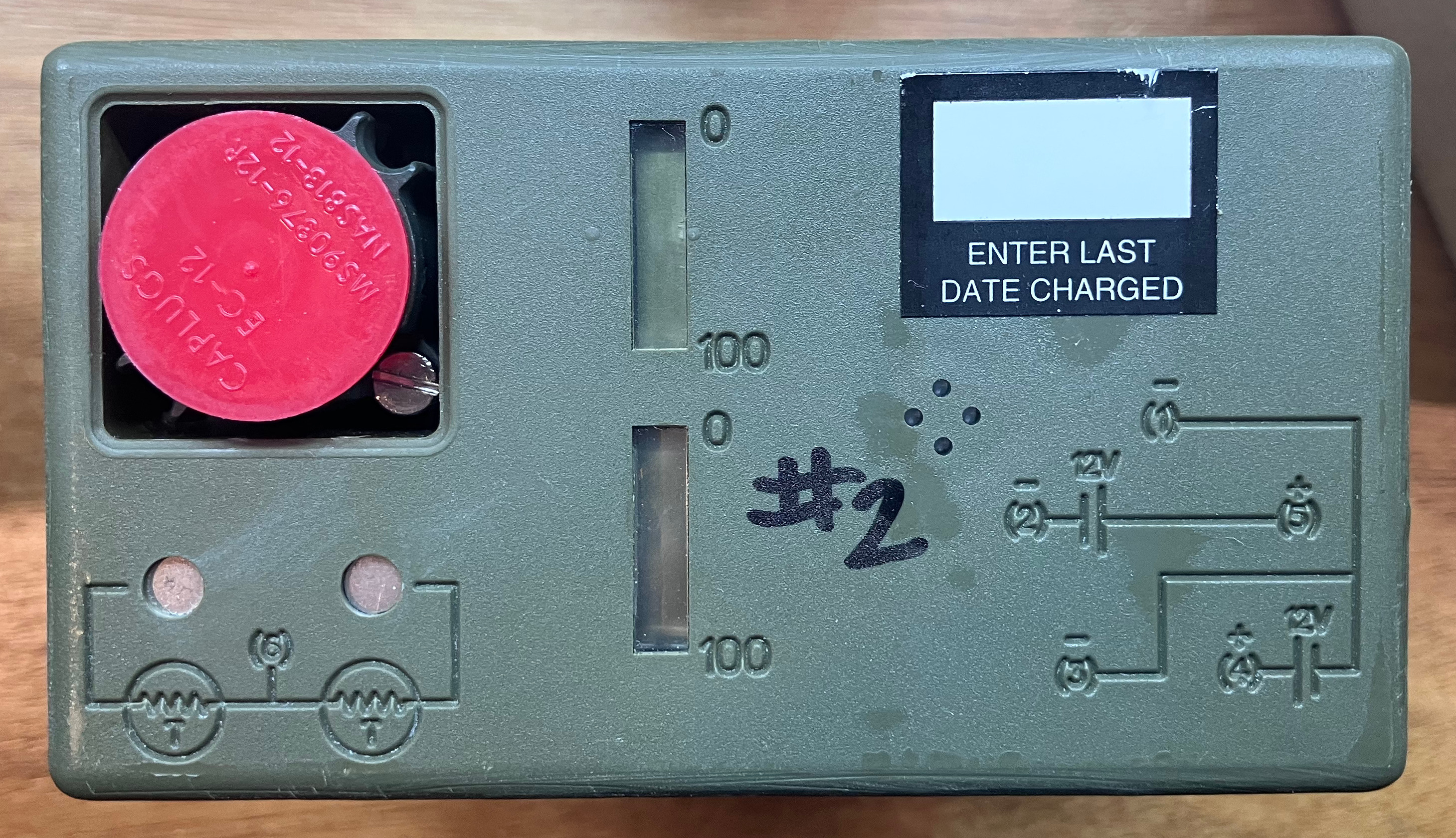
Top of battery.
In this view, the PCB is on the side facing down.
Note the gold pads for thermister connection.
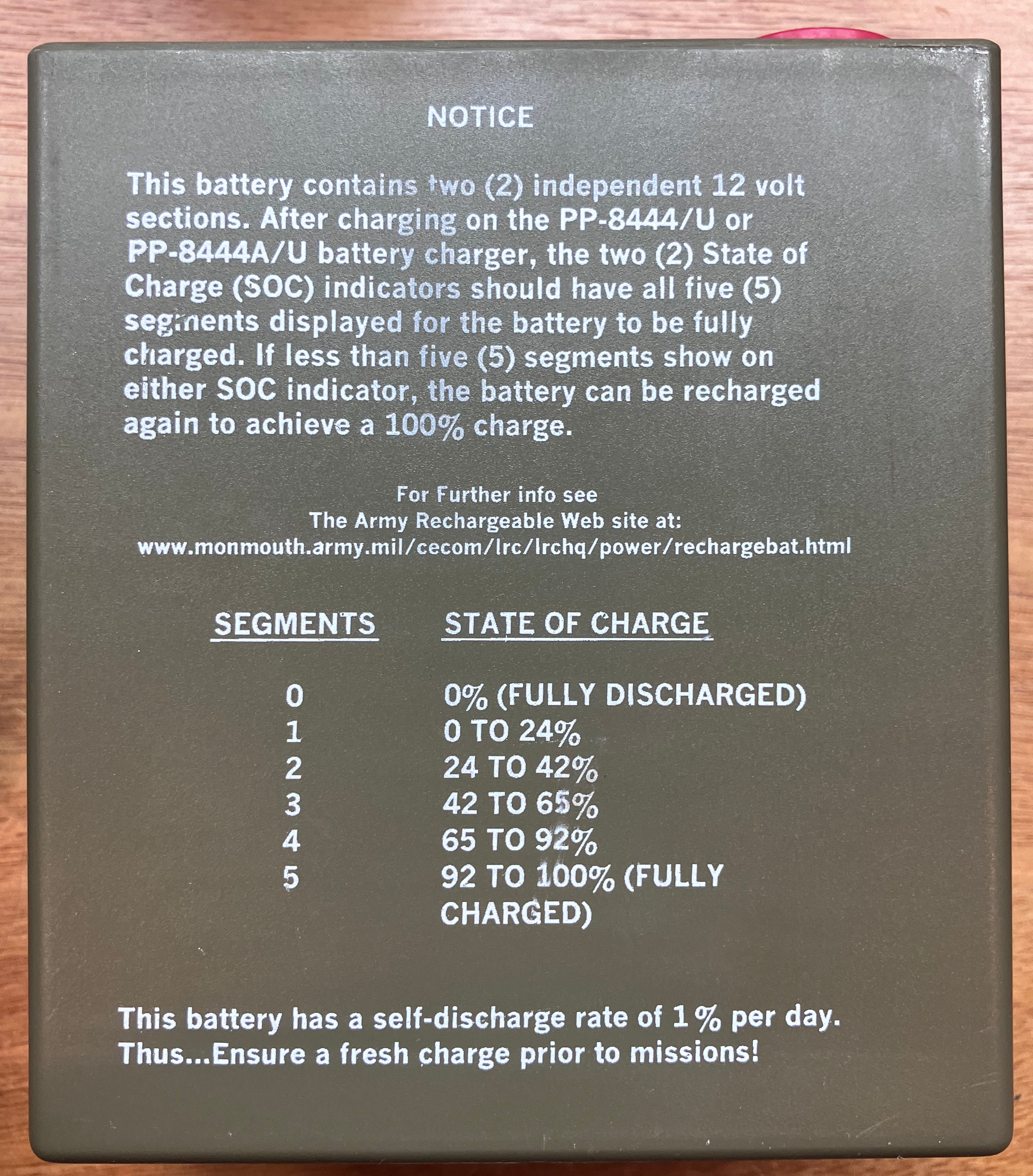
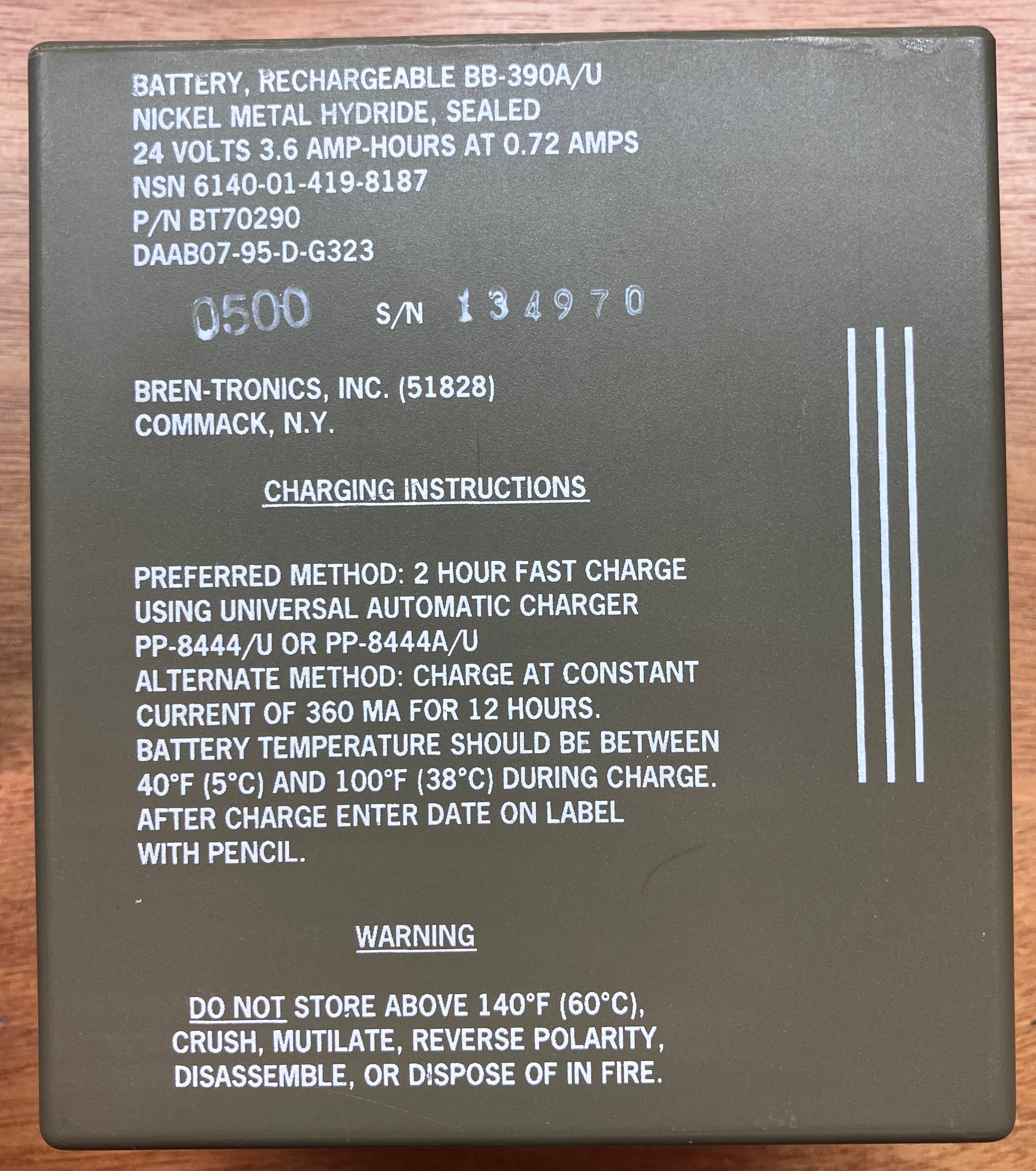
Front and back of battery.
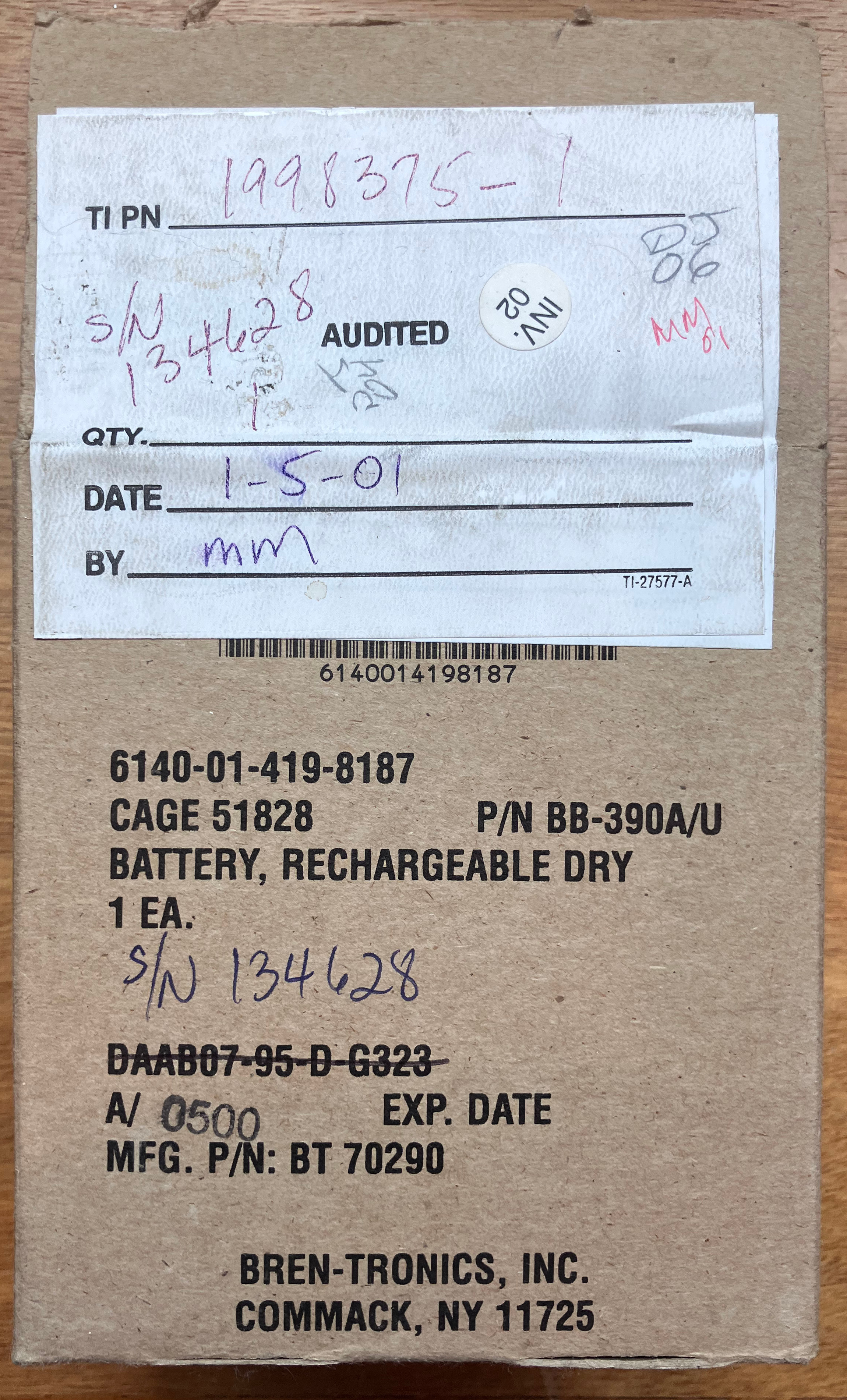
Box that it came in.
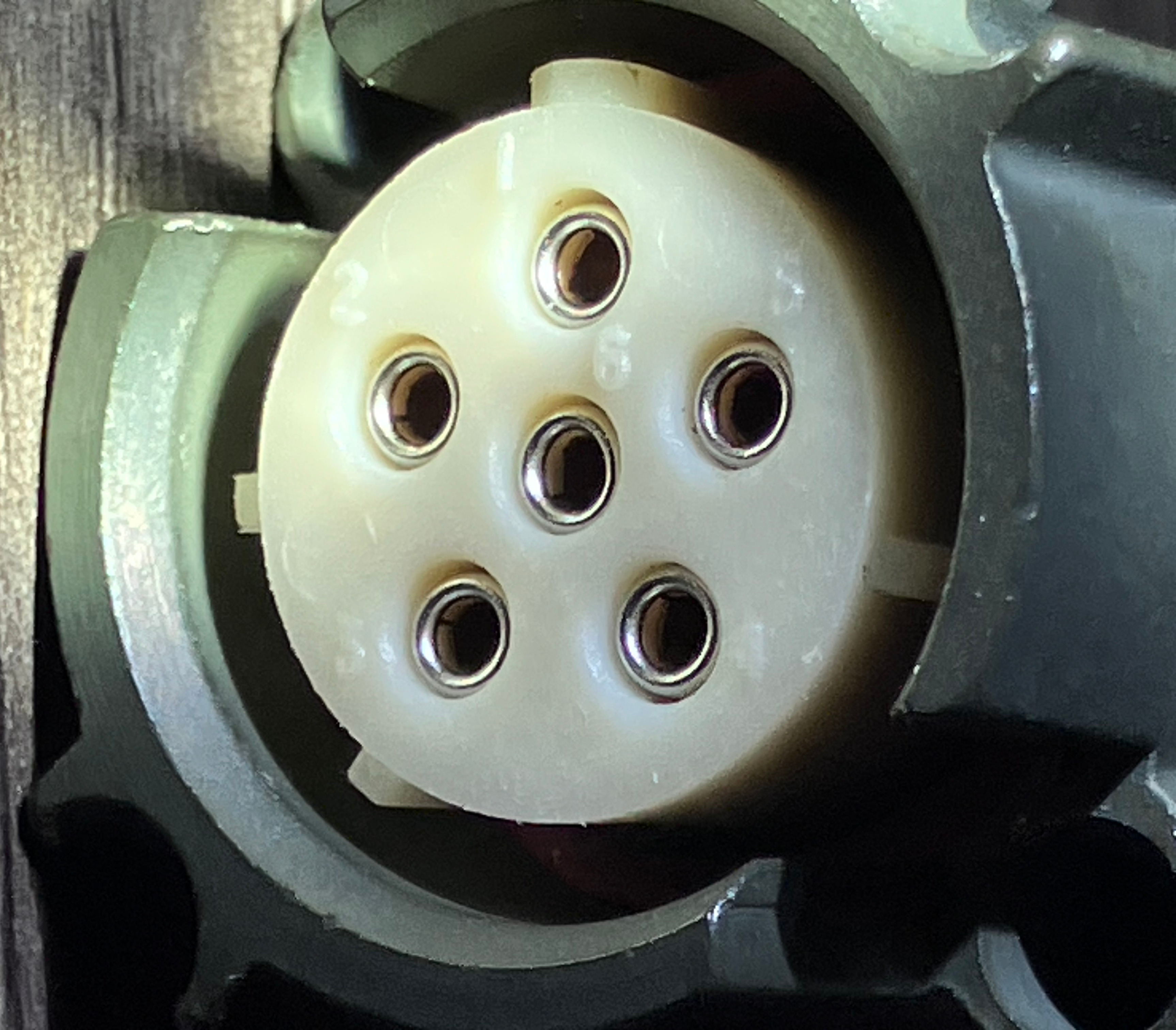
Primary connector.
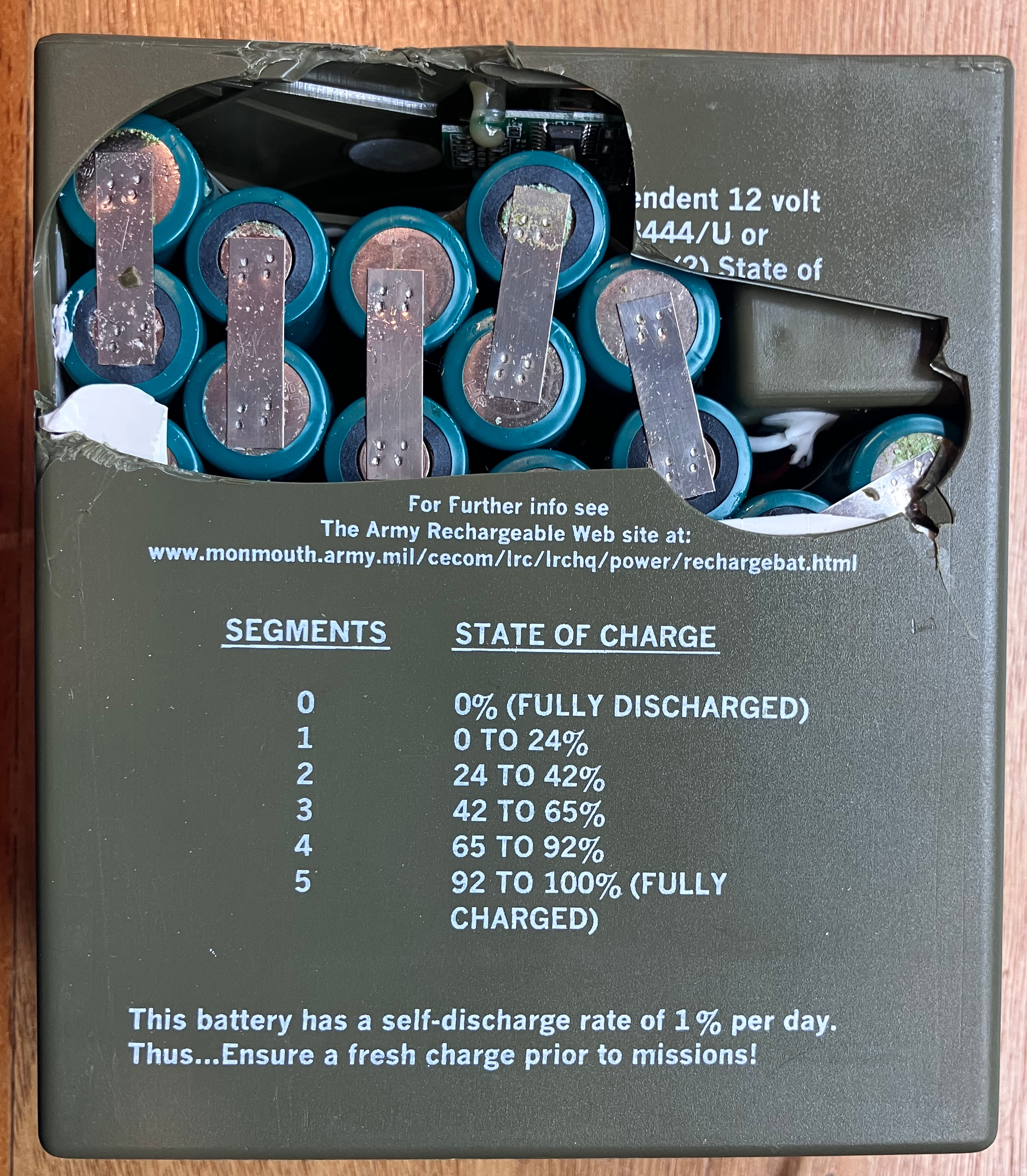
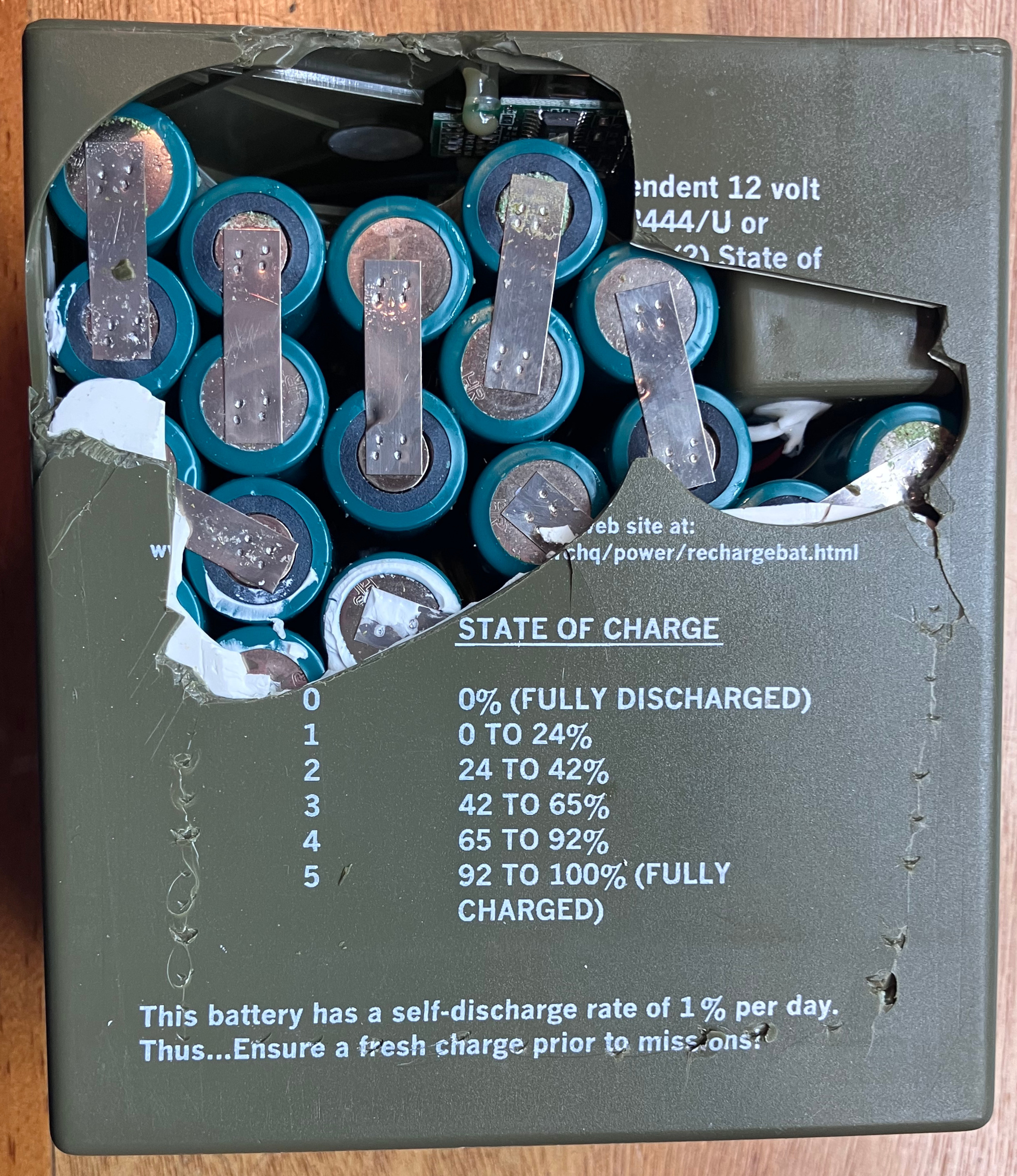
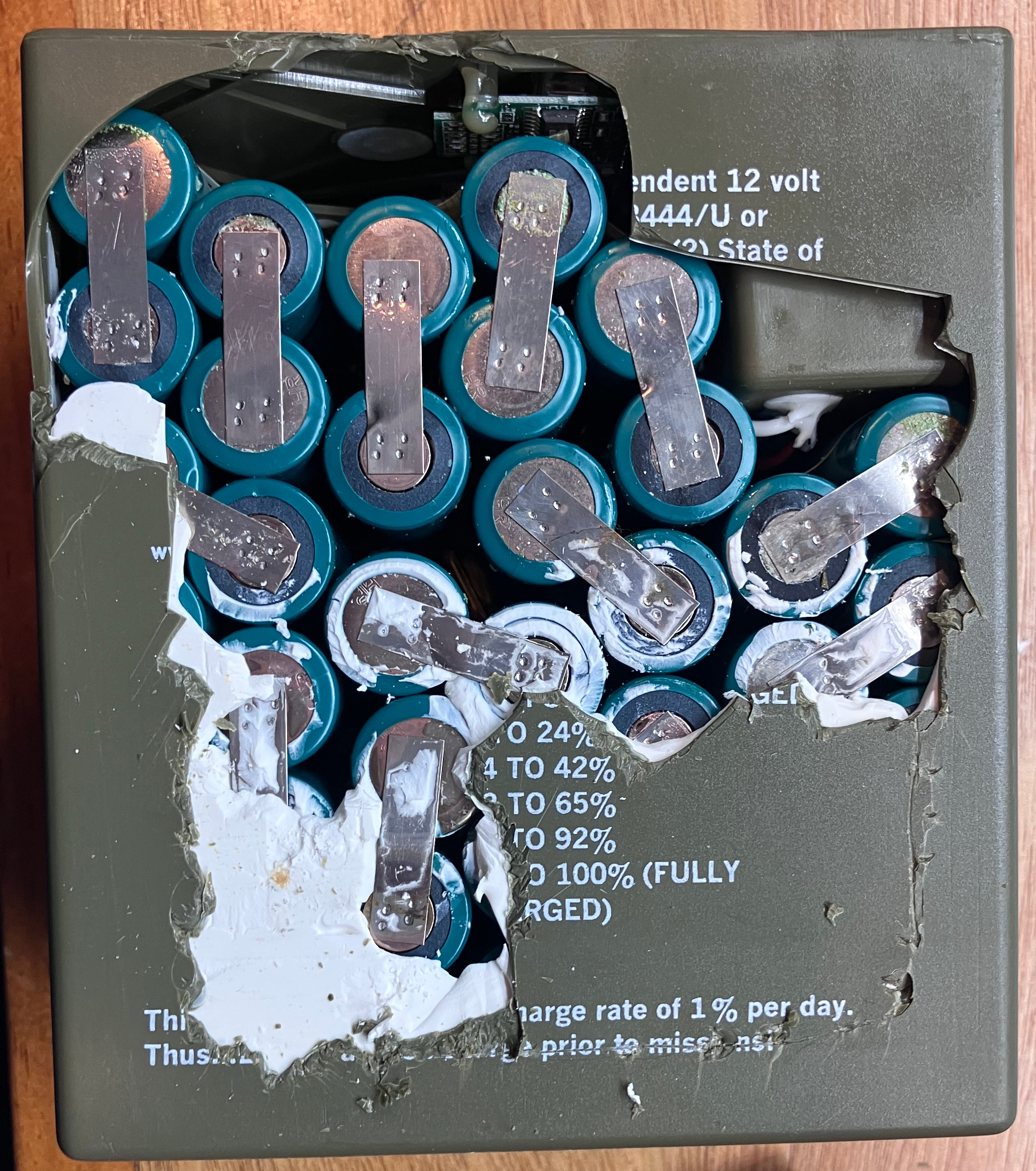
The silicone mastic makes it disturbingly similar to cracking a hard-boiled egg - including the tiny shards of 'shell'.
Note the charge level monitor and LCD driver PCB, just barely visible at the top.
The "cut out" for the primary connector is visible on the right side.
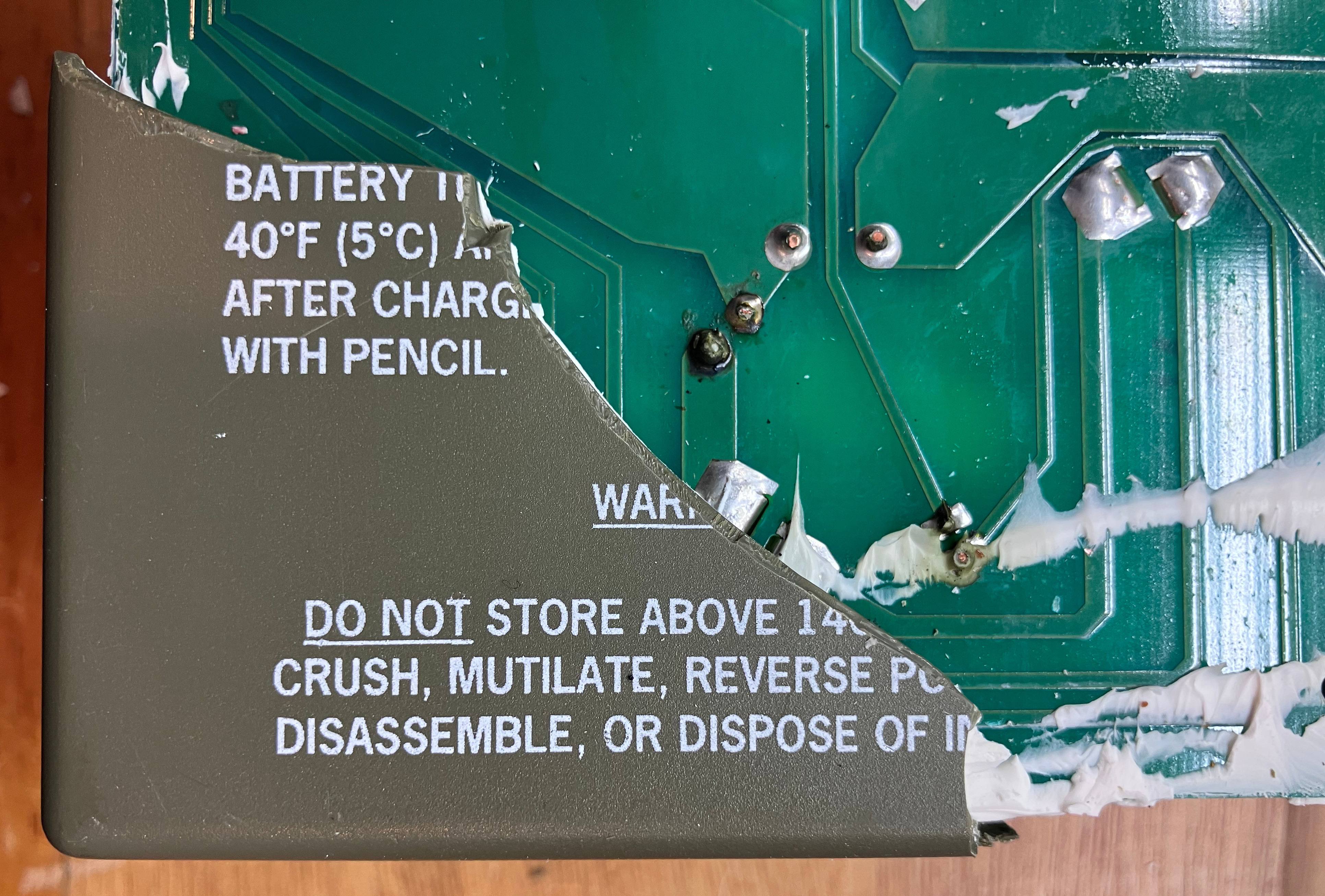
View of the mastic and PCB on the back side.
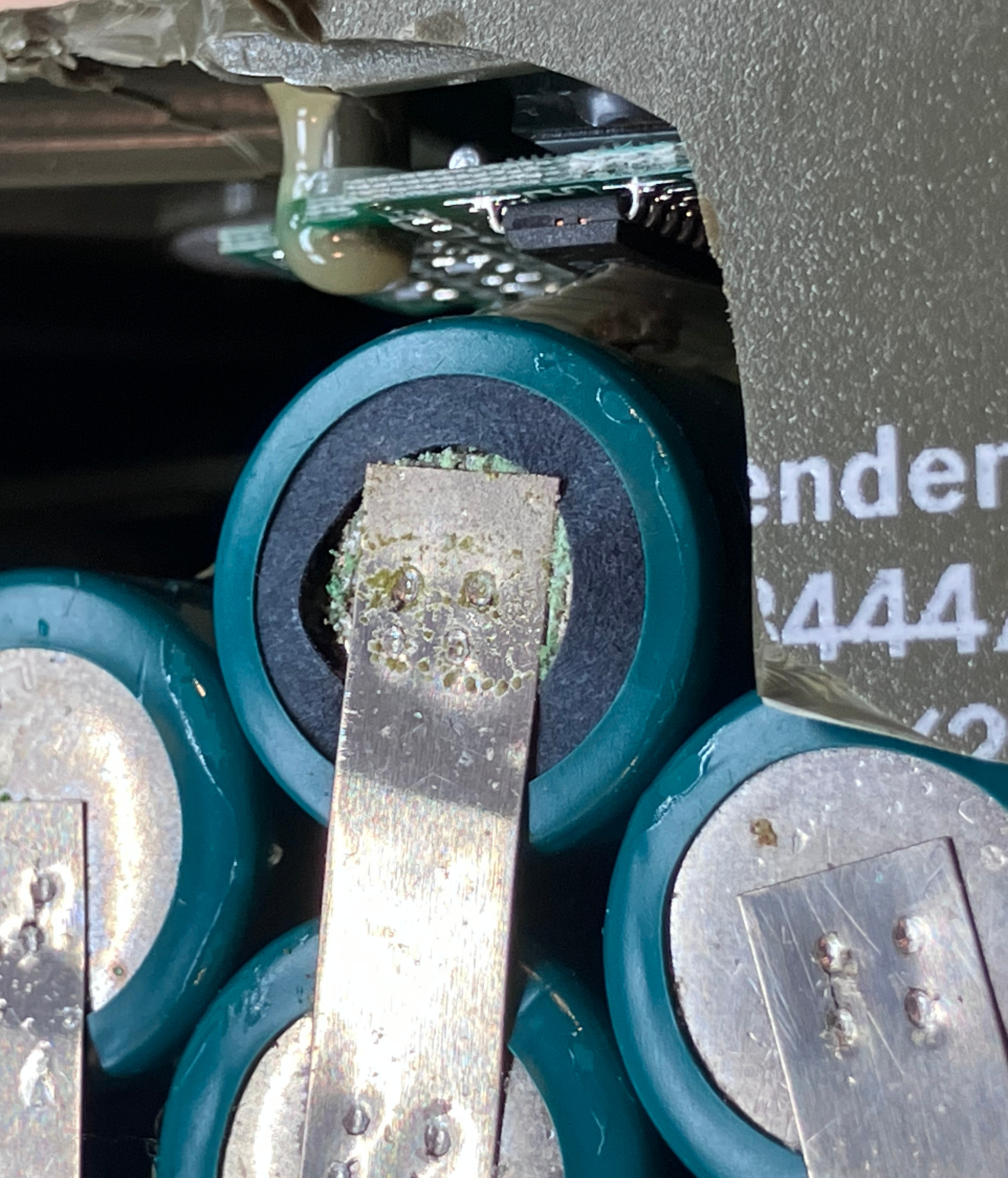
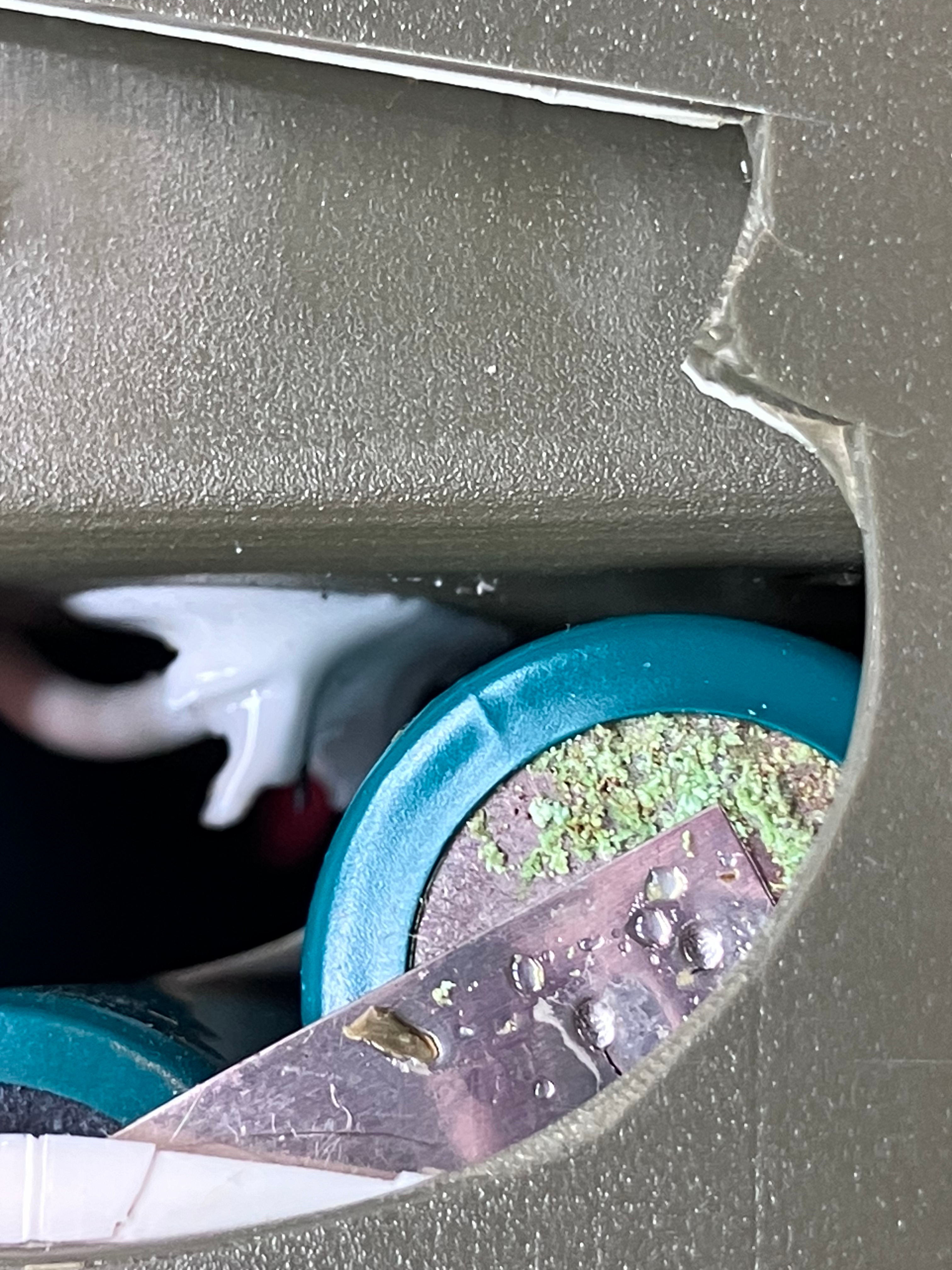
Some cells were clearly leaking.
Better view of the charge level/LCD PCB.
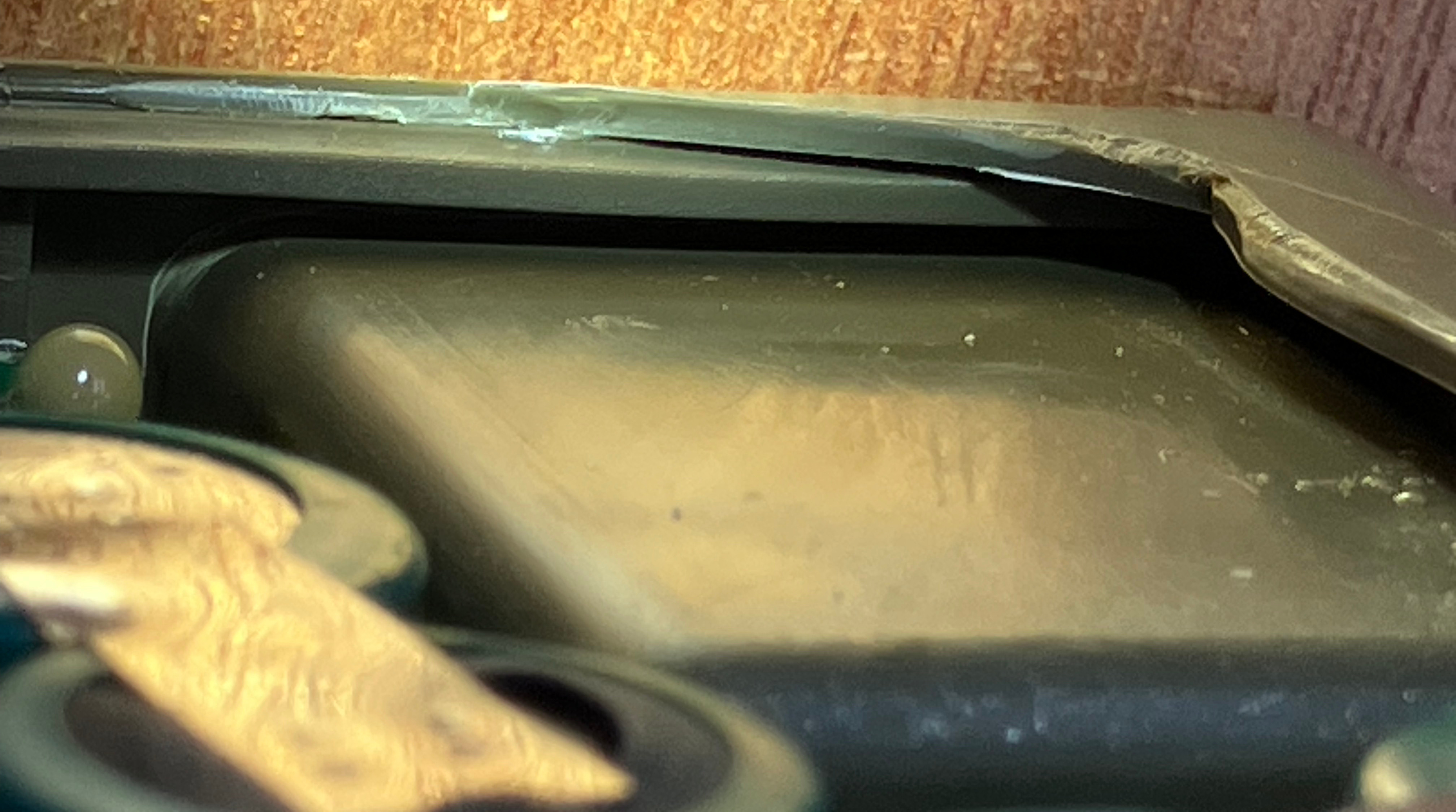
Detail of joint between top and case.
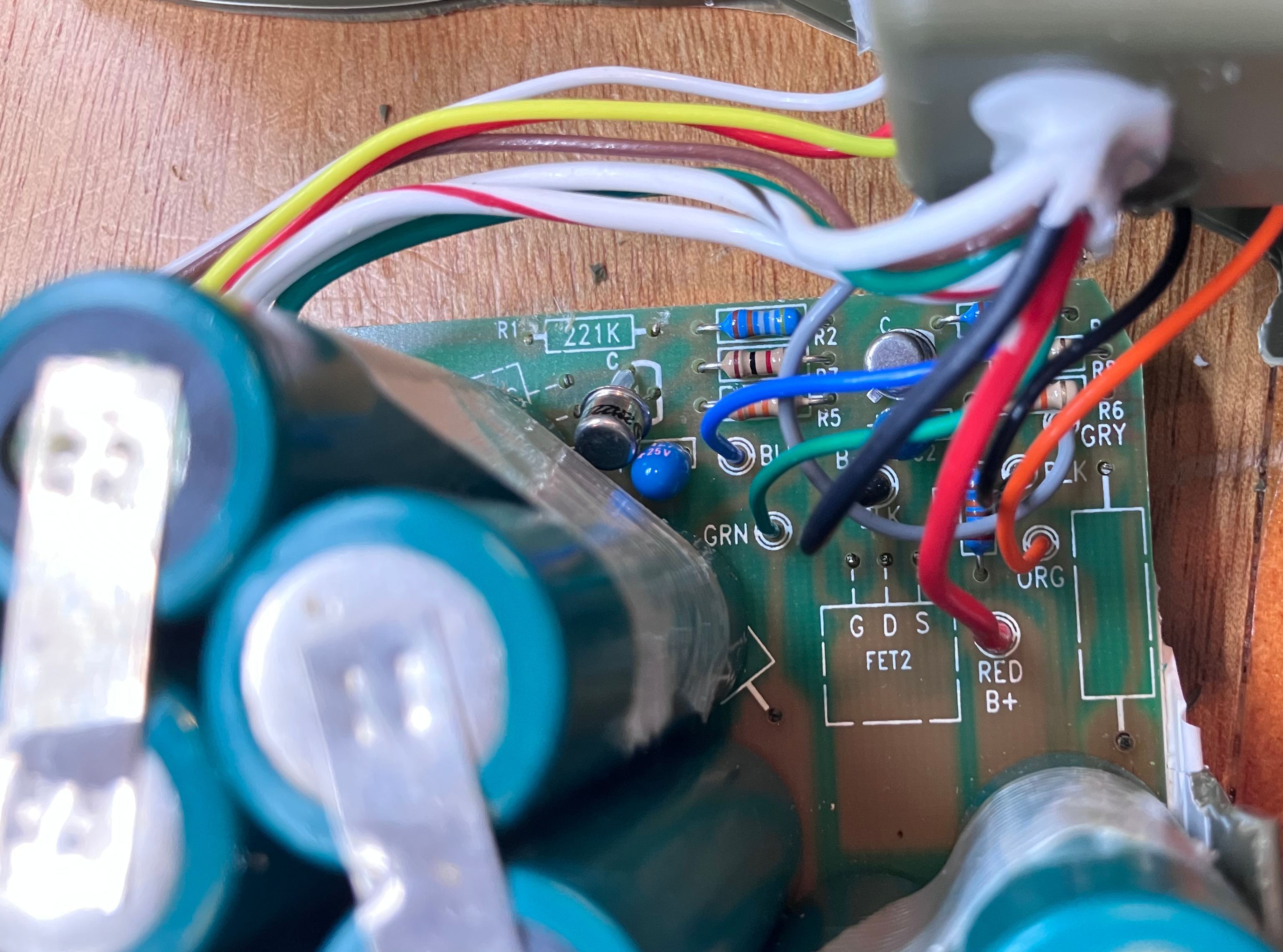
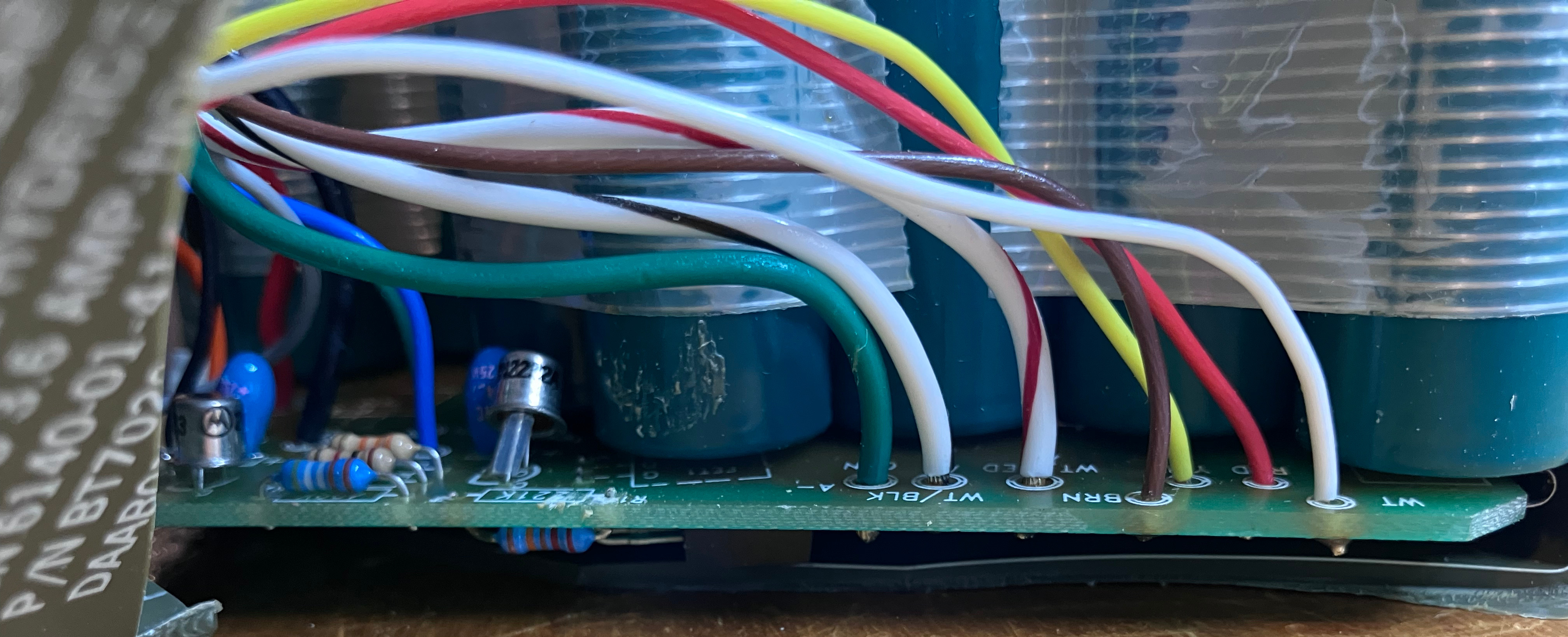
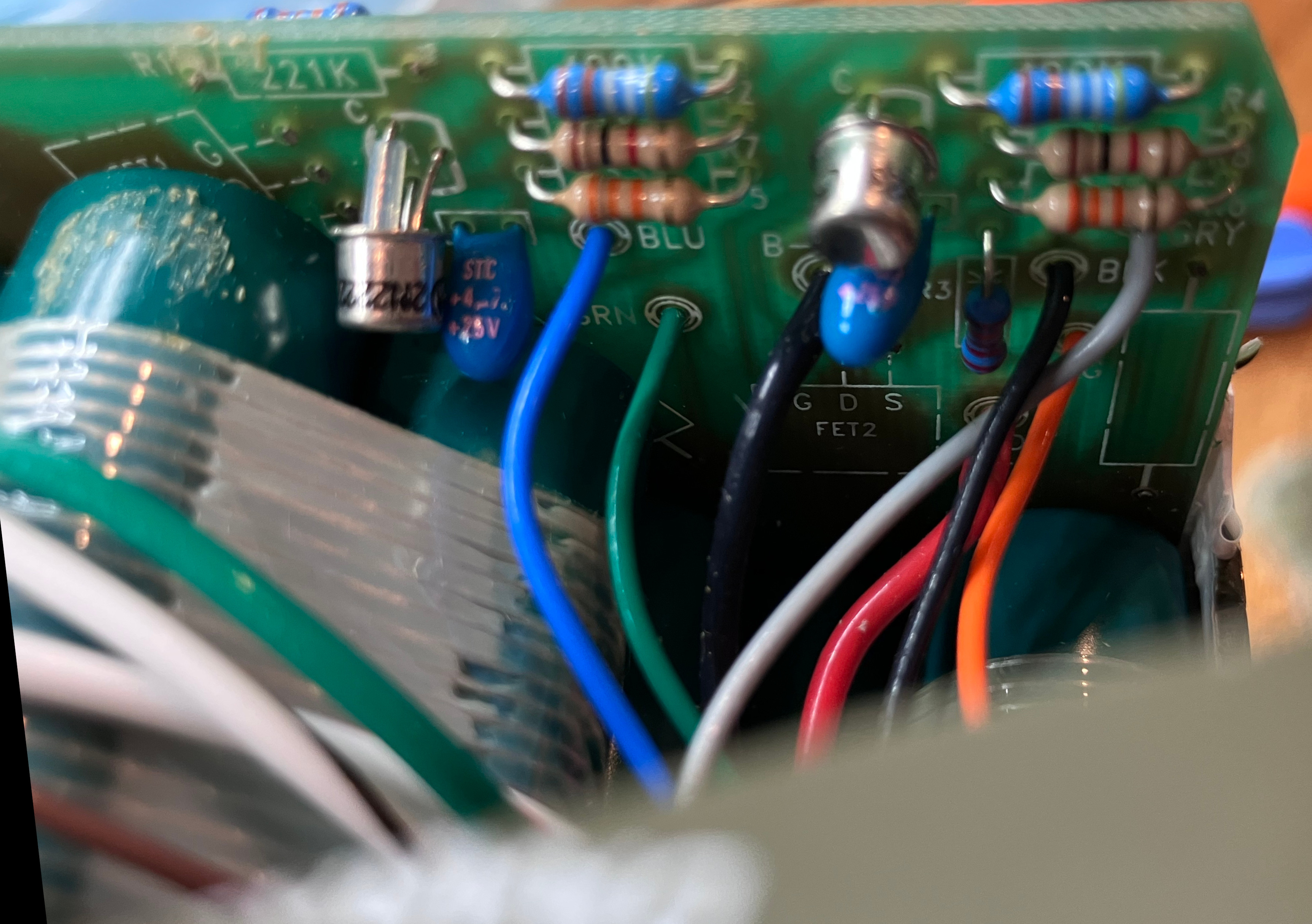
Detail of the wiring between charge level PCB/primary connector, and the main PCB.
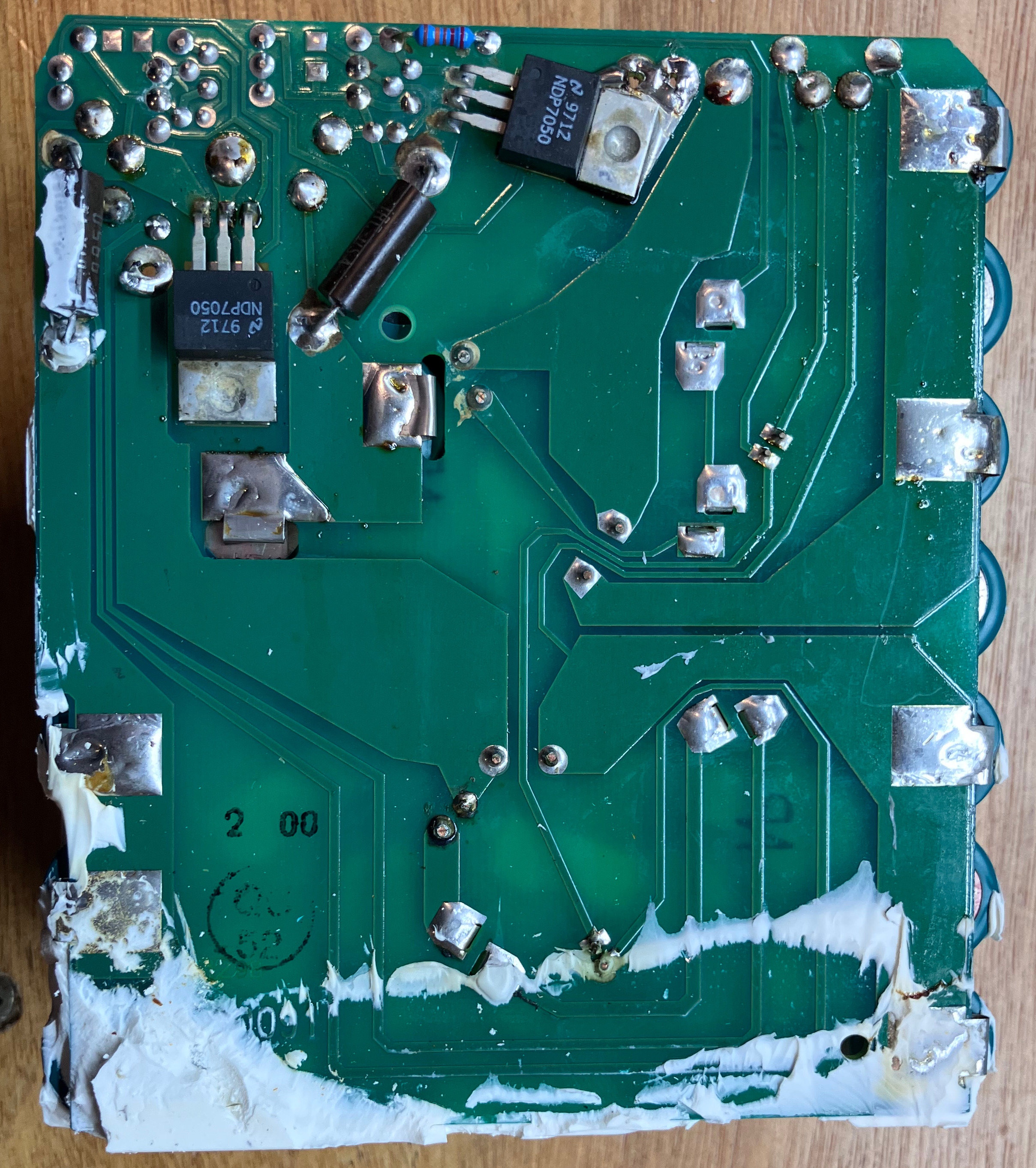
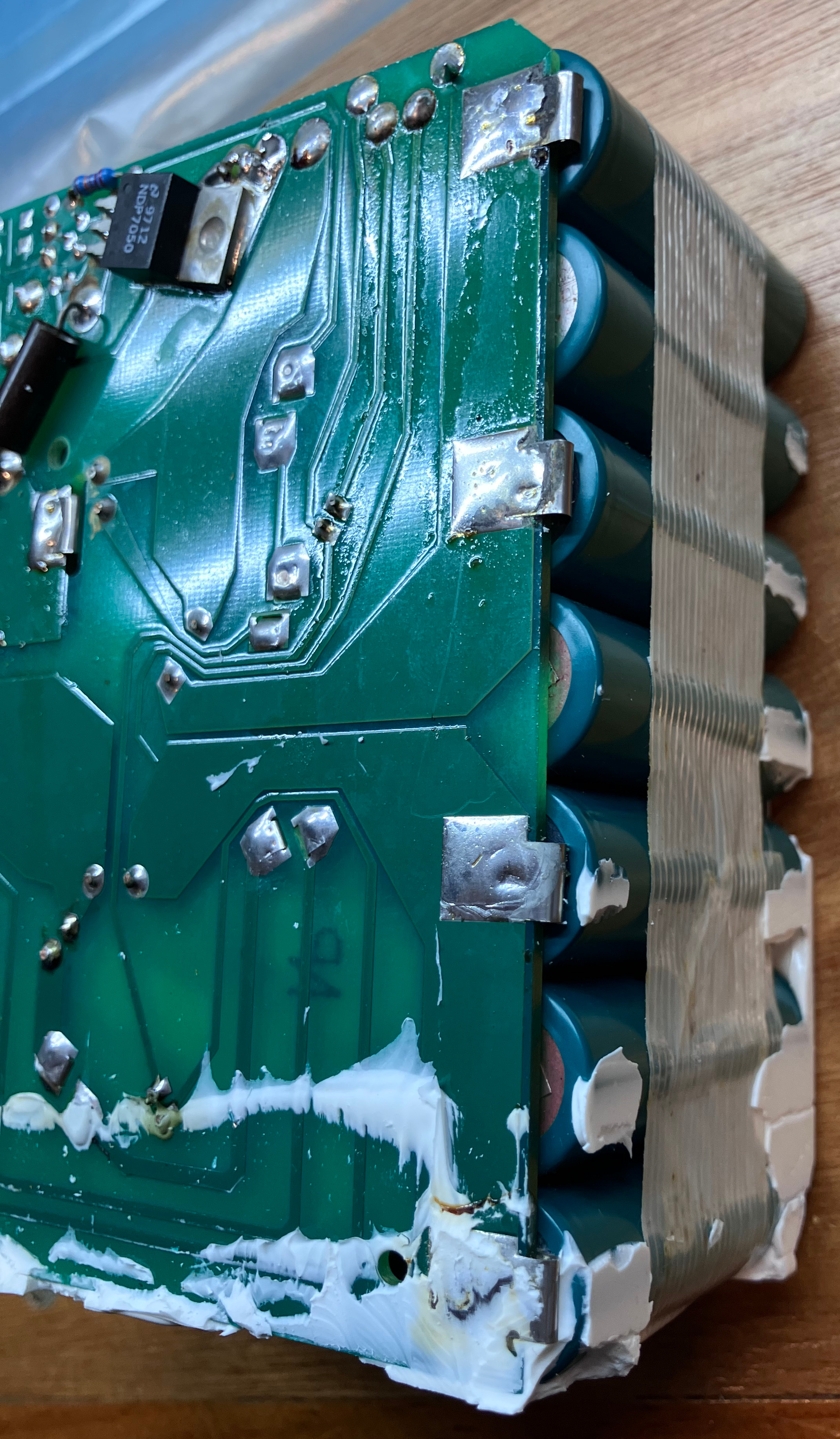
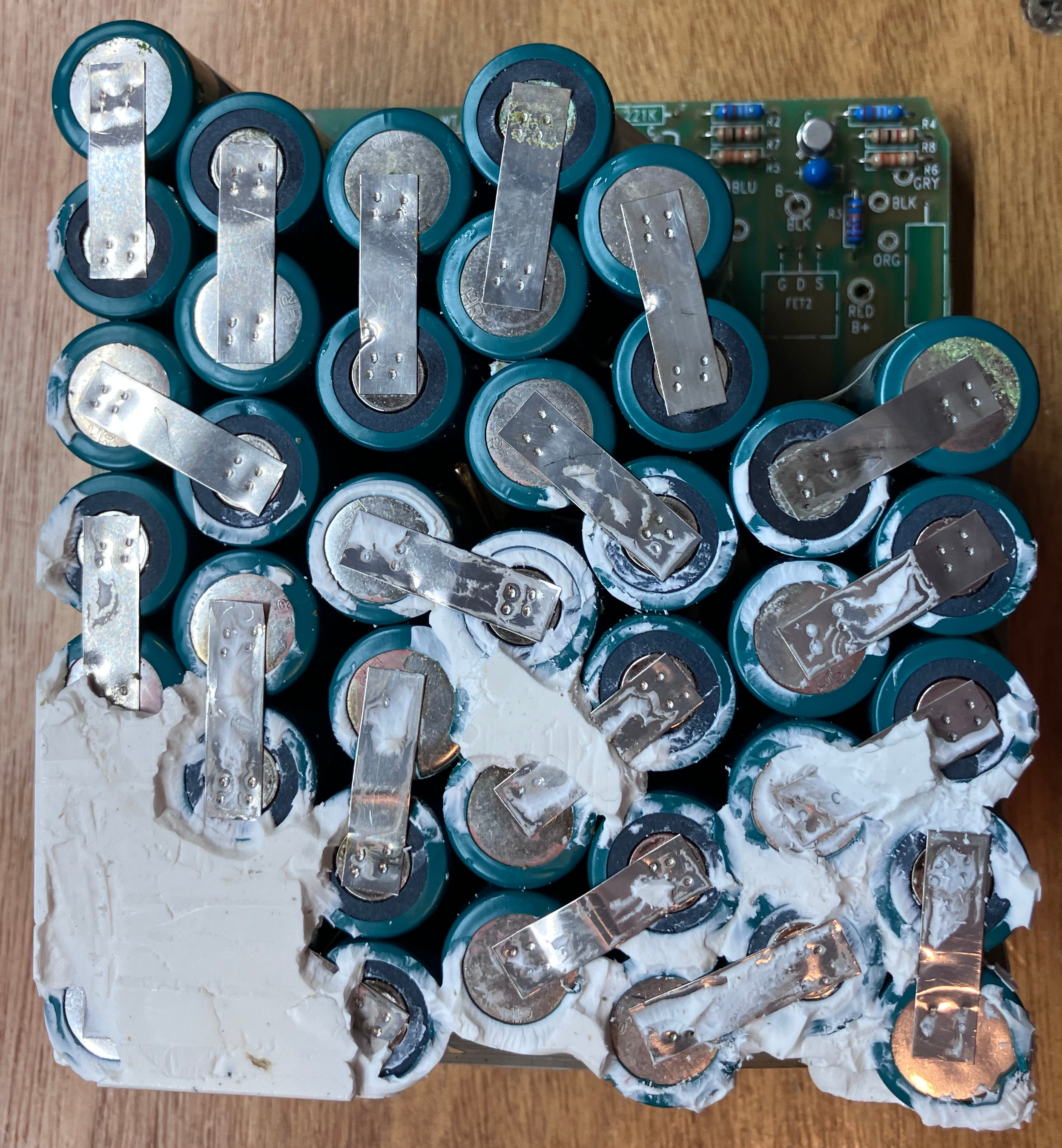
Assembly "spun" around vertical axis.
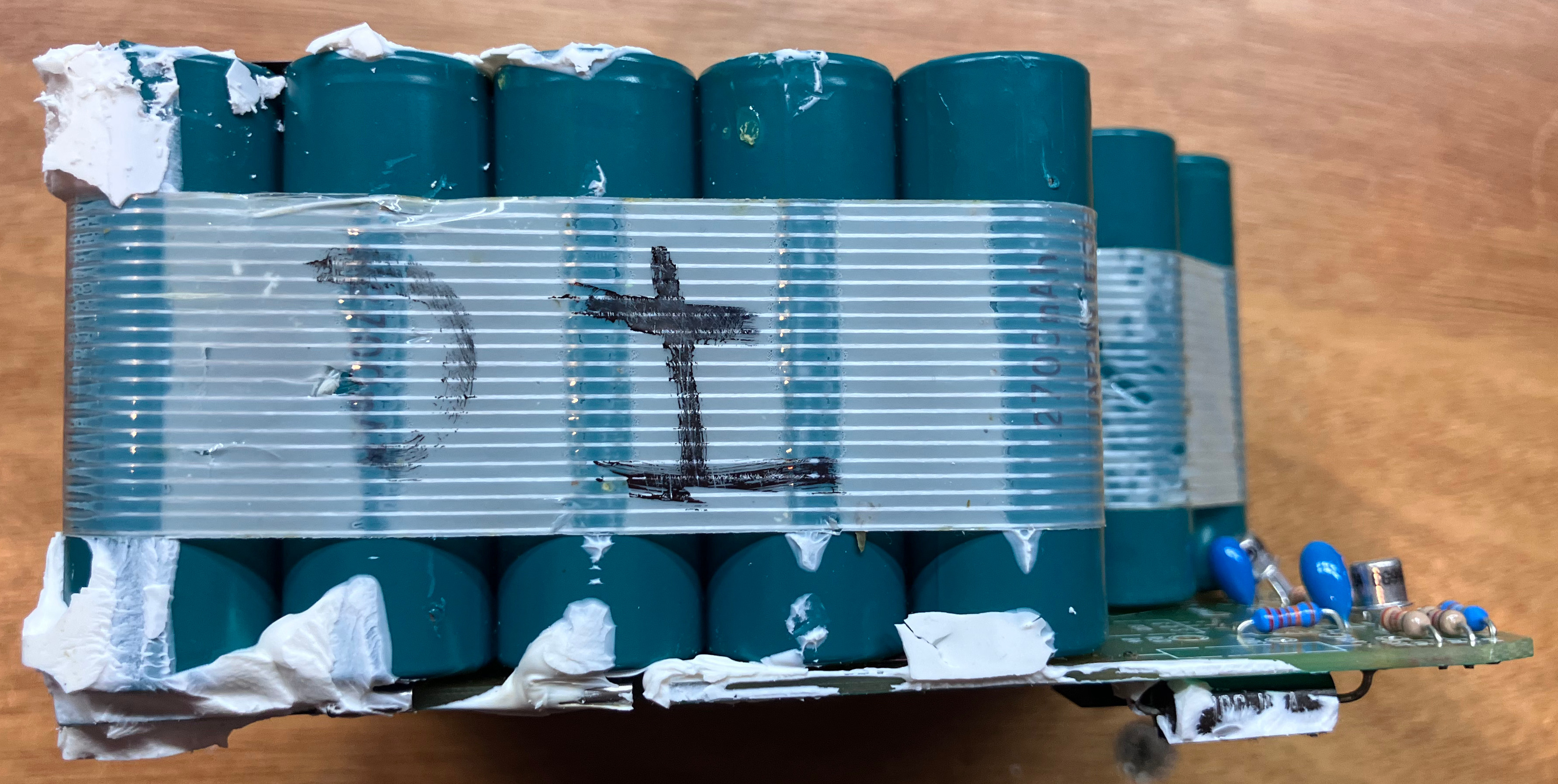
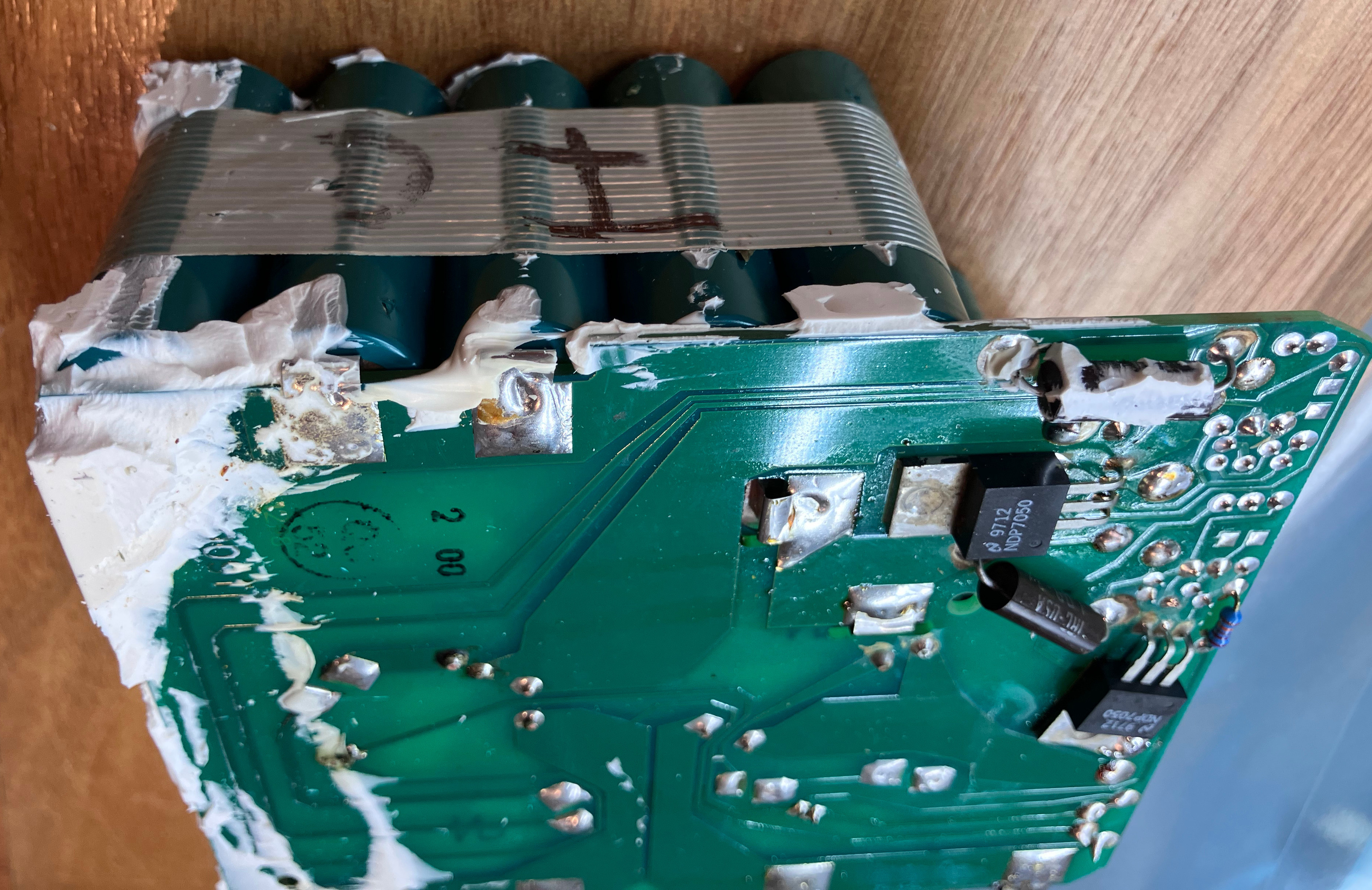
Who or what is "DI"? Quality control station, maybe?
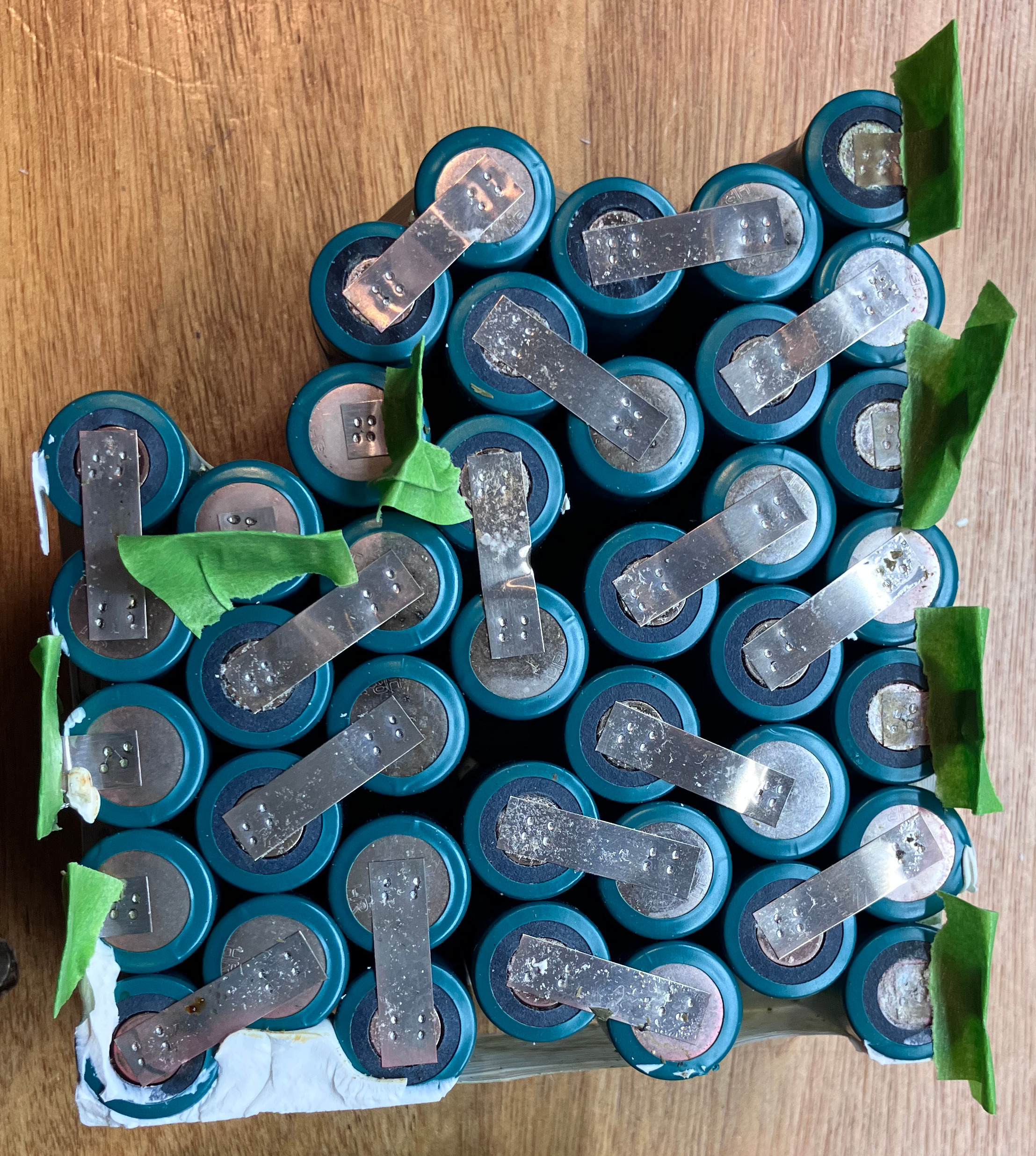
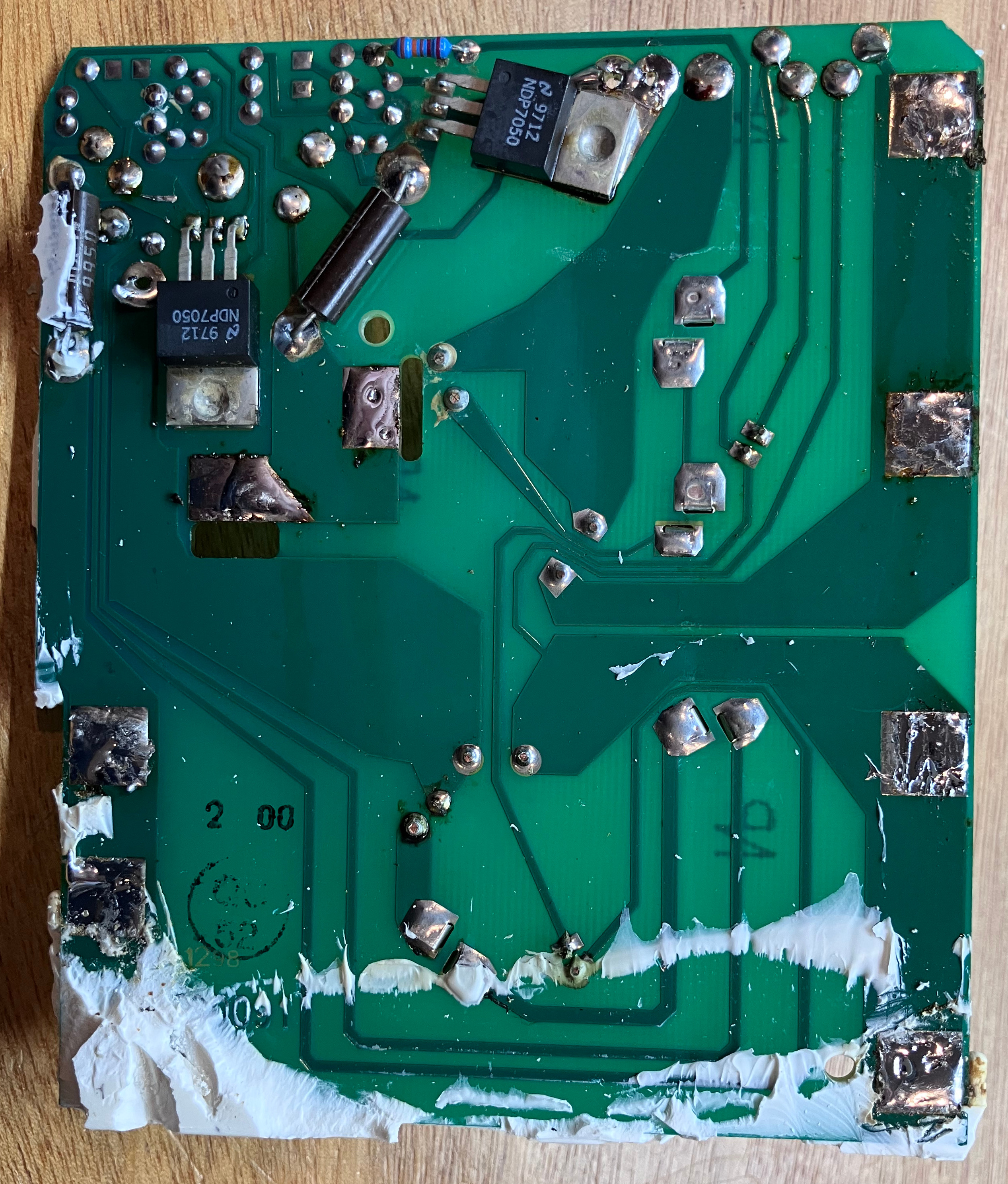
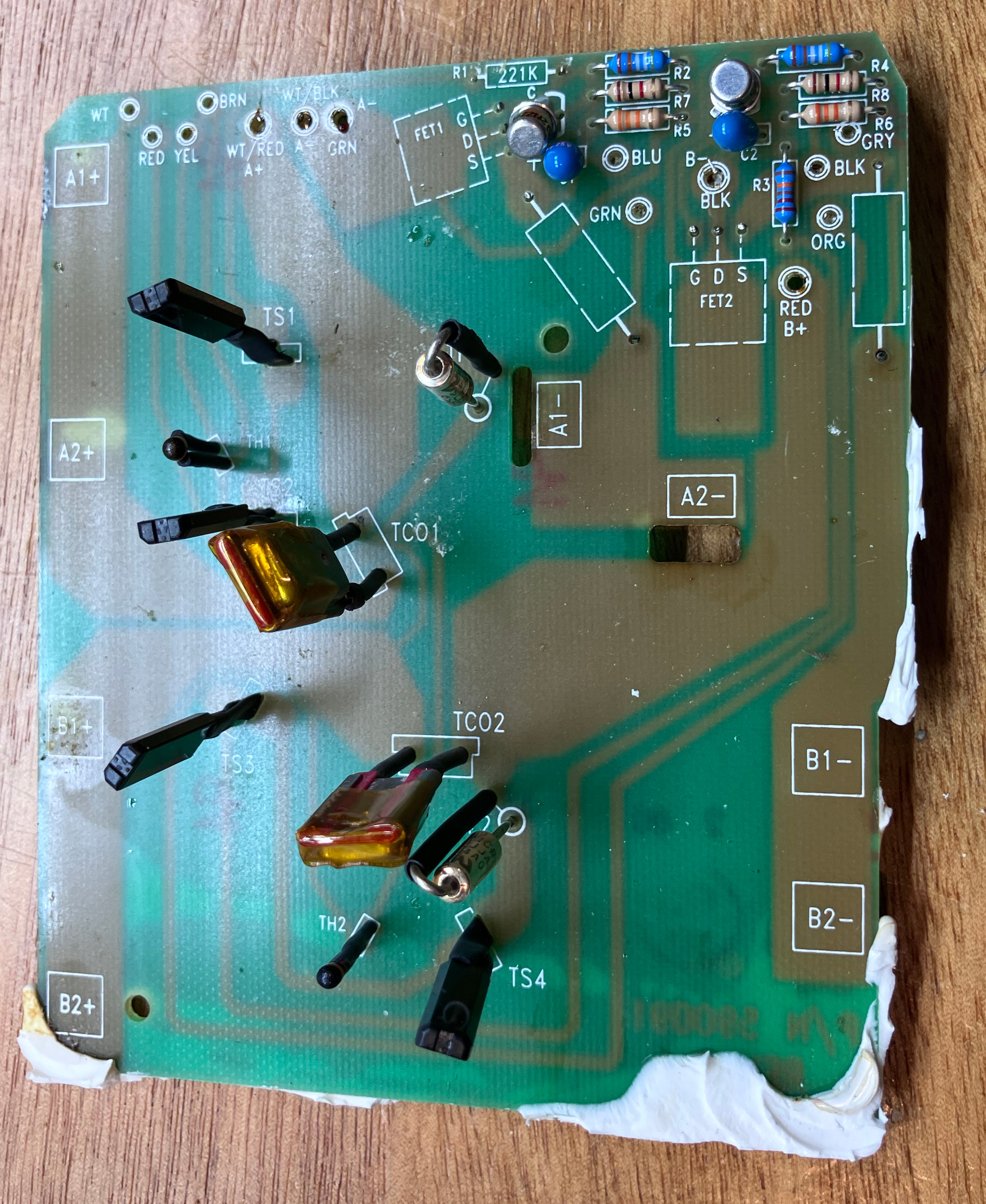
L to R: Cell pack detached. Backside of PCB. Front side of PCB.
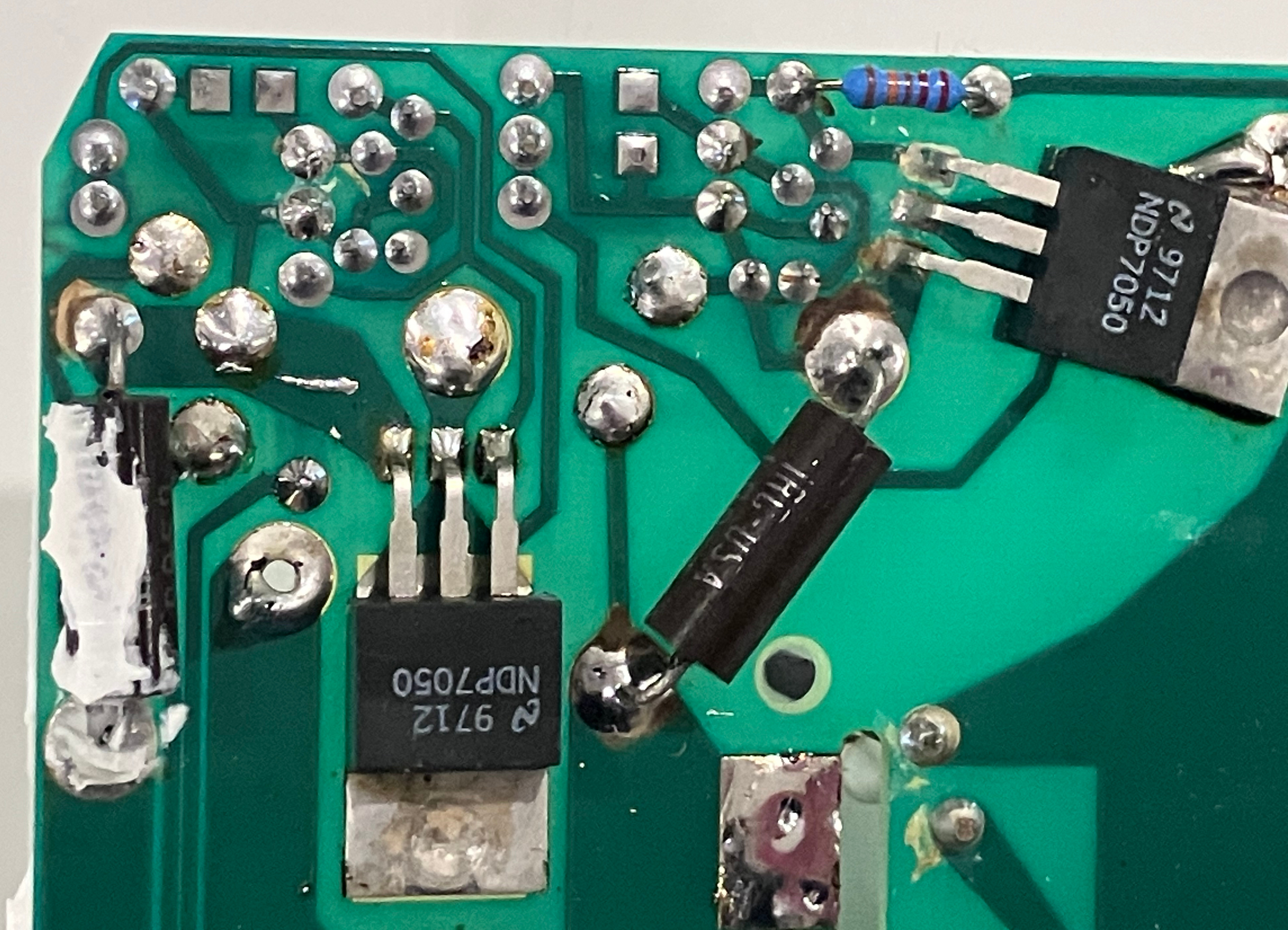
Better detail of the control circuit.
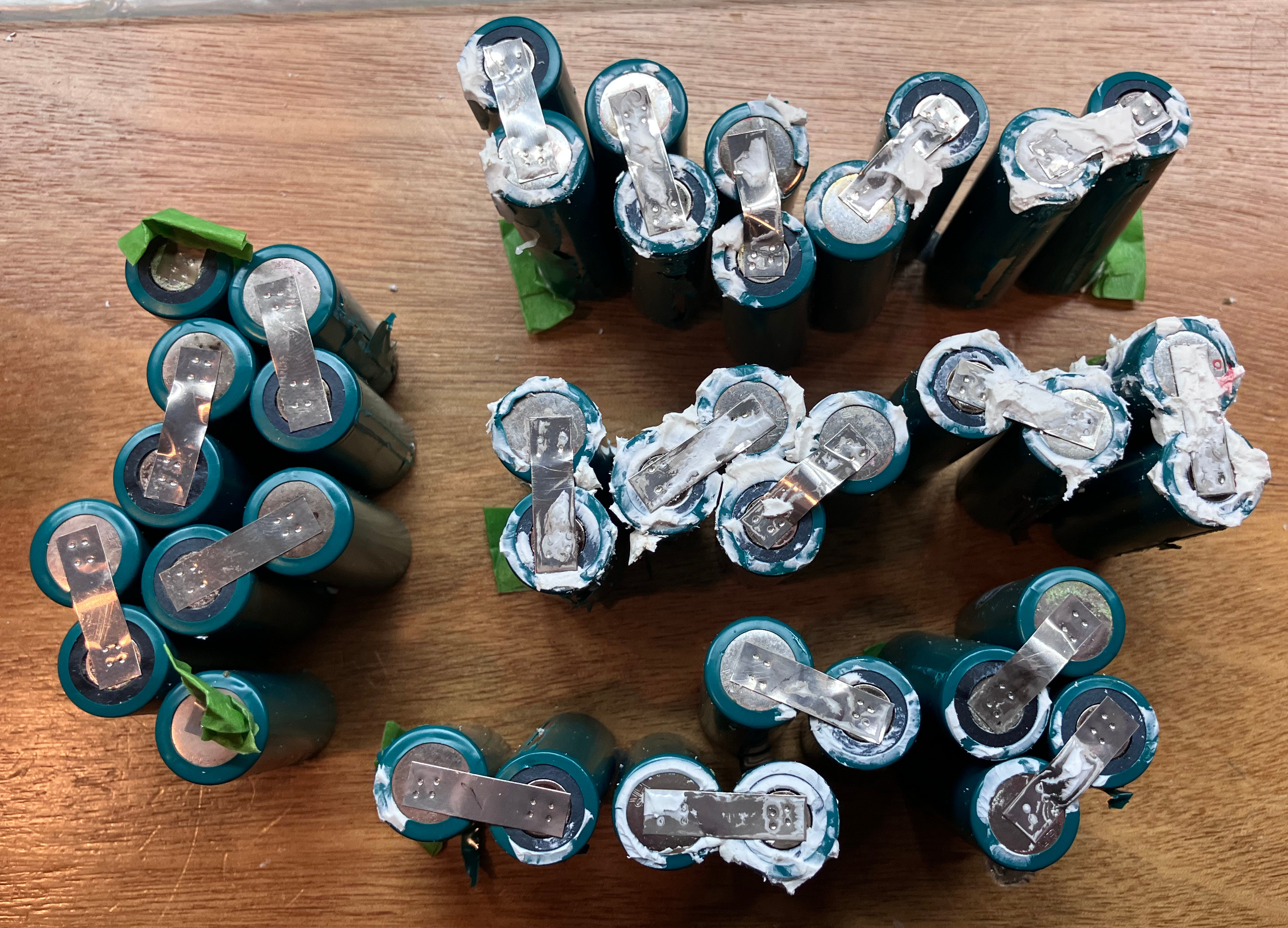
All four of the Nickle Metal Hydrid (NiMH) cells strings separated.
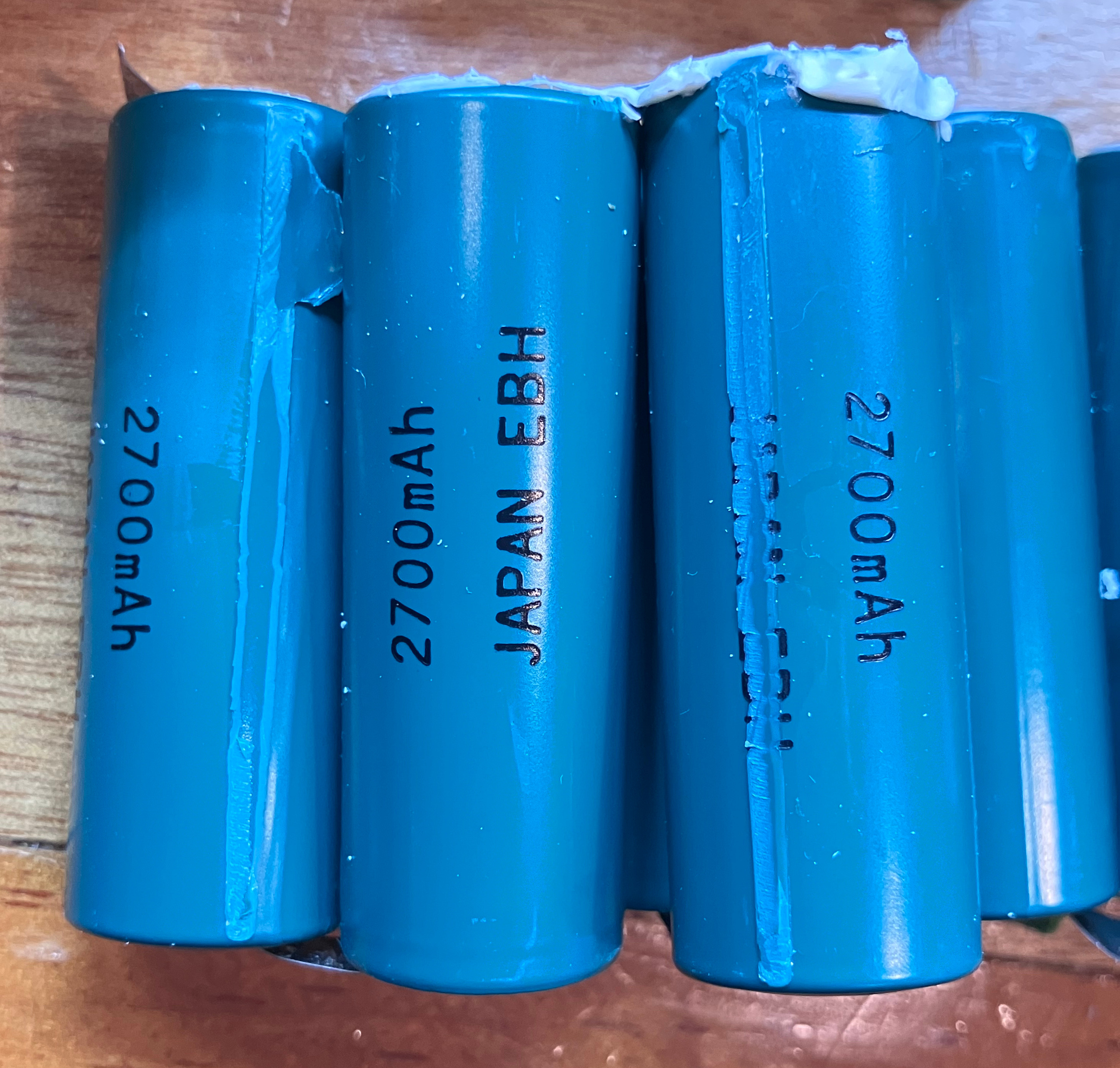
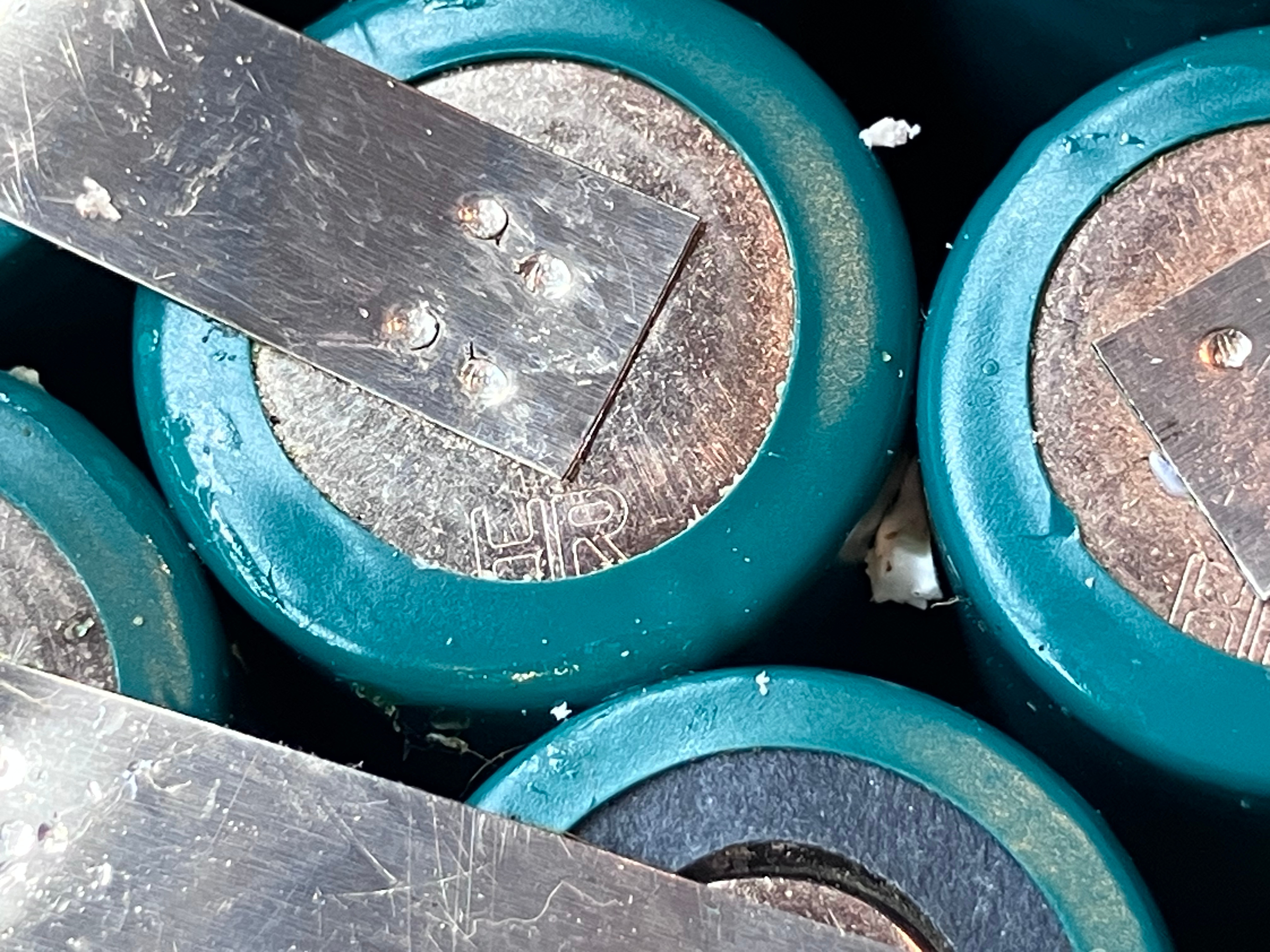
Cell markings. Note the "HR" stamp.
The heatshrink was def green, not blue. My phone camera "color corrected" it automagically.
Schematic
The part numbers in the schematic match the silkscreen names.To my complete surprise, the PCB silkscreen has values for most parts. Love to see it.
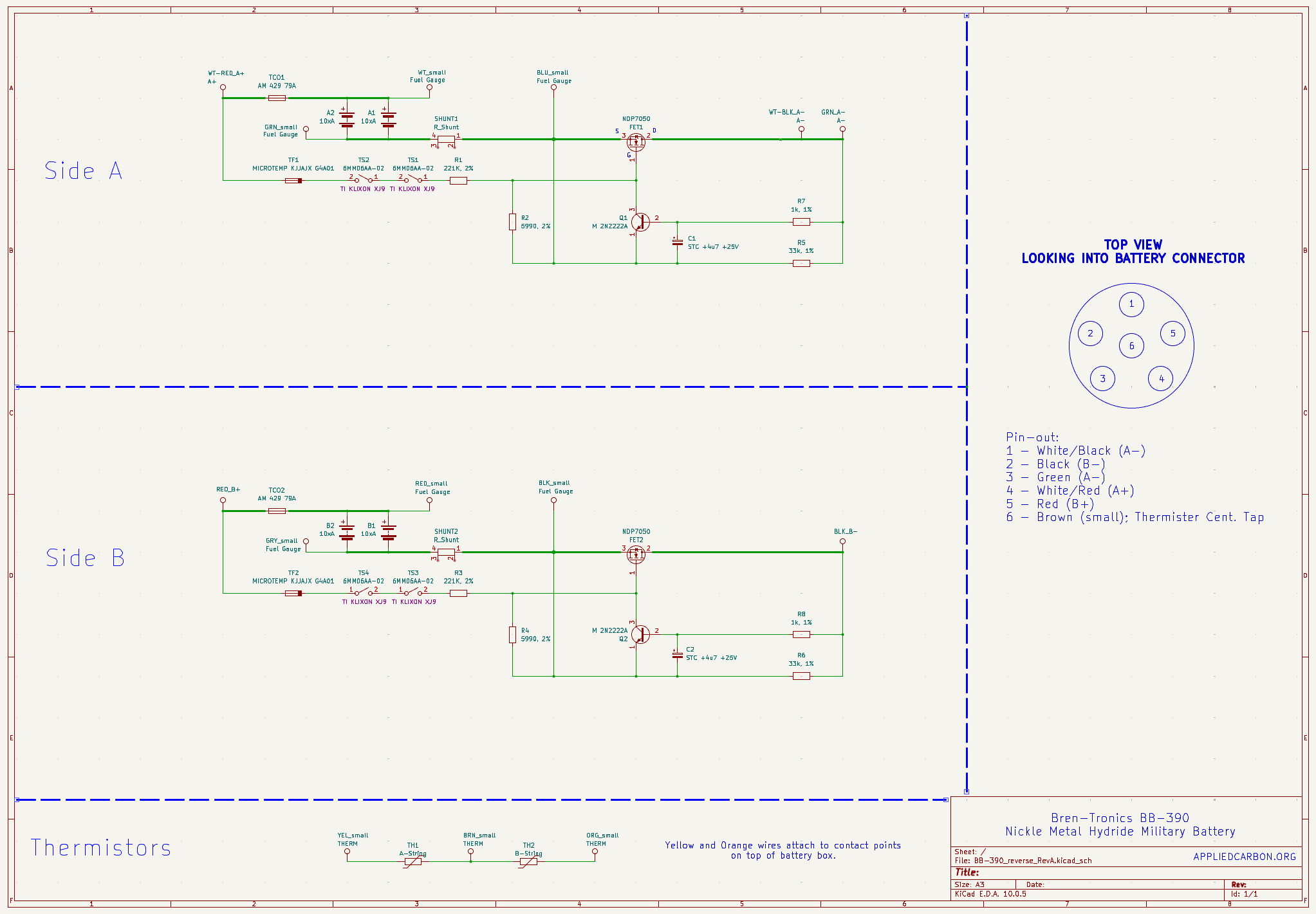
Click for PDF
Theory of Operation
Energy Storage
A battery is a string of electrochemical cells, linked in series and/or parallel to reach a desired output voltage and storage capacity. In this case, this battery achieves the needed voltage (nominally 12 V) by connecting 10x "A" size (17x50 mm) cells in series. (Yes, the "A" size is where the "AA", "1⁄2AA", "AAA", and "AAAA" sizes/names were derived from. Contrary to popular belief, no "AAAAA" or longer exists, as the IEC determined that those names were regularly confused with a person screaming.) The cells sport a green heatshrink tube stamped with a "(Made in) Japan" label and the string "EBH". One end of the metallic case is engraved(?) with "HR". These days, the "HR" mark is used in the part numbers of todays NiMH cells from Panasonic (or used to, they recently updated their part number nomenclature). Note that Panasonic acquired a majority stake in Sanyo 2009, and then absorbed it entirely in 2013.It's this writers opinion that these cells were likely made by Sanyo, and are from the famous Japanese-located NiMH line (arguably the highest quality NiMH cells in the world) which is now managed by Panasonic. That said, I've been unable to locate an era-correct datasheet or catalog to confirm this, likely because pre-2000 marketing material was typically physical/printed. One major oddity with the battery is Bren-Tronics engineers connected two 10x strings in parallel, which is highly unusual and generally considered to be bad design. When being charged, the voltage of a NiMH cell will rapidly reach "maximum" voltage (the exact value depending on charger design and charge current). As such the voltage difference between two cells, one at half charge and one near full charge, would be negligible. Since all cells have slightly different internal resistance, two cells wired in parallel would be at different states of charge after coming off a charger. As an aside, a NiMH charger would likely get confused by two NiMH cells in parallel: most "smart" chargers detect "end of charge" based on rate of cell temperature change and/or a very small drop in output voltage (~15 mV), either of which may not be detectable due to the other (partially charge cell) overwhelming the signals. As a result the charge process may never correctly complete and the charger will hit the safety time-out (if the charger has one). As such, over multiple charge/discharge cycles one cell in our hypothetical assembly would never be fully charged and would eventually be driven below it's discharge cut-off voltage, and thus be damaged and eventually fail entirely. For comparison, Lithium Ion cells have a voltage output very closely related to it's state of charge (SoC). If one connects two cells in parallel that are at disparate states of charge, the "higher" cell will discharge into the "lower" cell until the voltages reach equilibrium. This is why large Lithium Ion packs can be built from smaller cell sizes (i.e. 18650, 21700, or 26650), while NiMH (and NiCad) packs must be made from physically larger cells. For a classic example of this, compare the NiMH packs found in most Toyota Prius vehicles against virtually any large Lithium Ion battery pack. So it's really kind of a conundrum how Bren-Tronics made this work. It's clearly evident on the PCB that the strings are permanently tied in parallel, no switching tricks here. My assumption is they took the unusual step to test and match-up cells with very similar internal resistances so both strings would charge in almost the same amount of time. This is a time-consuming process (and probably would generate a stream of "waste" cells, that were hard or impossible to match) but this is a military product (presumably with the typically associated astronomical price-tag) so Bren-Tronics could literally afford to do this. Even then it's just delaying the inevitable, and I assume these batteries failed (read: lost a significant amount of capacity and became useless) earlier than strictly necessary. So why do this in the first place? My assumption here is the US military issued a battery specification they needed, including voltages, minimum energy storage capacity, probably a minimum number of required charge/discharge cycles, and the physical characteristics (i.e. size of the case), and this is what Bren-Tronics engineers came up with to hit that target. It doesn't matter if the battery fails earlier than strictly possible, as long as it exceeds the desired energy capacity at the designated end-of-life cycle count.
Keeping that in mind, note that the battery is built from 40x cells with a nominal rating of 2700 mA at ~1.2 volts, or 129.6 Watt-hours, and the nameplate capacity is about 86.4 Watt-hours. That works out to a difference of 43.2 Watt-hours or an extra 50% (!) over the listed capacity. That is a lot of margin. One thing I want to point out: it's not just 50% margin, but exactly a 50.0% margin. In a system that has to have a little bit of "fudge factor" due to manufacturing and material tolerances, that is extremely unlikely to happen naturally. Given all this, we can probably reconstruct the logic of the design:
- To hit the designated output voltages they need two strings of 10x cells, and the engineers are limited to a small number of cell sizes due to the mechanical envelope. In fact, the dimensions of the battery case are effectively perfect for "A" sized cells, to the point where I wonder if perhaps it was designed that way, for the original non-rechargeable/primary batteries.
- But because 20x cells didn't provide the energy capacity required, and/or Bren-Tronics wanted to maximize the capacity of the battery, they decided to double up on the cell count. (When one needs a specific output voltage, one can only specify multiples of that cell count.)
- This leaves Bren-Tronics with the awkward situation of trying to charge NiMH cells in parallel, and the associated problems. If I had to guess, they calculated the total capacity-
2.7 Amp-hours * 1.2 Volts * 40x = 129.6 Watt-hours
-and then just multiplied by 2/3rds, which gives us 86.4 Watt-hours - which is the exact nameplate capacity:3.6 Amp-hours * 24 Volts = 86.4 Watt-hoursEt Voilà!